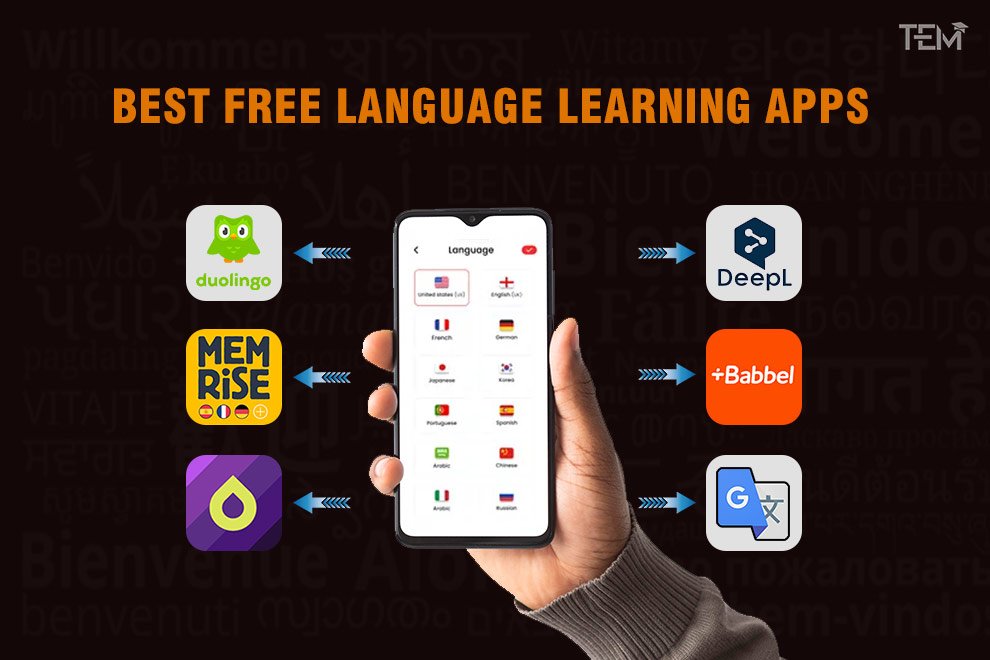
Finding the best free language learning apps in 2026 no longer requires expensive courses, physical textbooks, or rigid classroom schedules.
Today’s free language learning apps have evolved into powerful digital tools that help millions of learners worldwide build vocabulary, improve pronunciation, and gain confidence in real-world conversations.
Whether you want to learn English for career growth, Spanish for travel, or a new language purely out of curiosity, the best free language learning apps now offer structured lessons, AI-powered personalization, and access to global learning communities.
This guide takes a research-backed, learner-first approach to identifying the best free language learning apps currently available. Drawing insights from high-authority sources such as PCMag, NBC News, and BBC Learning English, this article evaluates each app based on learning effectiveness, ease of use, free features, and long-term value.
By the end, you will know which free apps are genuinely useful, which ones have limitations, and how to combine them for the best learning outcomes.
Quick Summary Table of Best Free Language Learning Apps
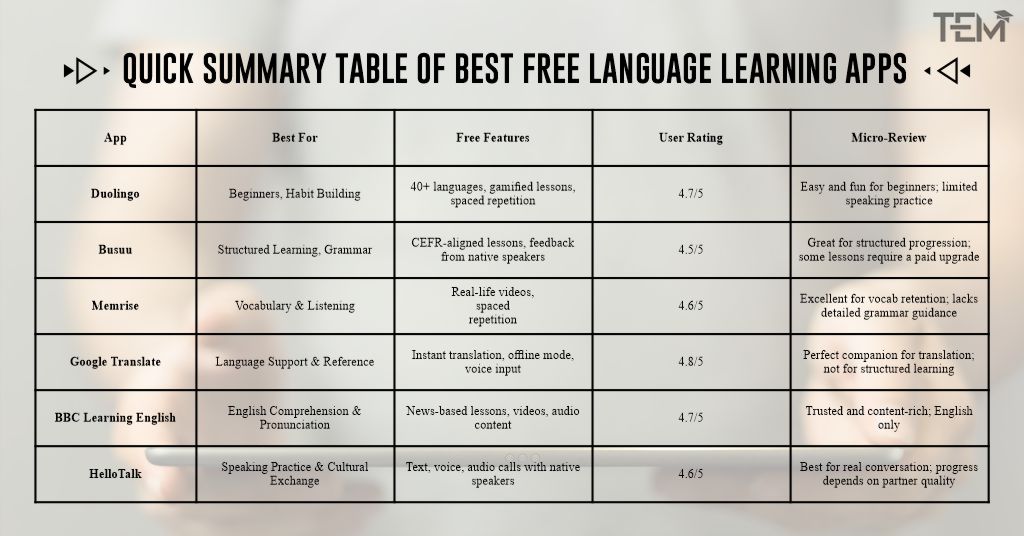
Independent reviews from established technology publications, including PCMag’s analysis of the best language learning software, support the strengths and limitations highlighted in this comparison.
How We Evaluated the Best Free Language Learning Apps
Choosing the best free language learning apps requires more than popularity or app store ratings. Each platform in this list was evaluated using clear, learner-focused criteria aligned with how people actually acquire languages.
Evaluation Criteria
- Quality of free content (not limited to trial-only access)
- Support for core language skills: speaking, listening, reading, and writing
- Ease of use for global learners across devices
- Alignment with proven learning science, including repetition, context, and feedback
- Credibility of the platform, instructional design, and long-term value
The goal is not to crown one “perfect” app, but to identify the best free language learning tools for different learning goals, skill levels, and use cases.
1. Duolingo: Overall Best Free Language Learning App
Duolingo is the most popular free language learning app in the world, and for good reason. Its short lessons, simple interface, and habit-building design make it one of the easiest ways to start learning a new language.
What Duolingo Does Well
Duolingo focuses on vocabulary, basic grammar, and sentence structure using short daily exercises. Lessons typically take only a few minutes, which makes consistent practice easier for busy learners.
The app uses spaced repetition to help users remember words over time, while streaks, points, and rewards encourage daily engagement, demonstrating how gamification in education can improve learning outcomes. Duolingo supports over 40 languages and can be used completely free, making it accessible to learners worldwide.
Limitations to Know
While Duolingo works well for beginners, it offers limited speaking practice and little real-world conversation. As learners reach the intermediate level, progress may slow due to the lack of deeper grammar explanations and extended language use.
Who Duolingo Is Best For
- Complete beginners just starting a new language
- Casual learners looking for quick daily practice
- Learners building a daily language habit
Who It Is Not Ideal For
- Learners aiming for advanced fluency
- Professional or academic language use
- Deep grammar mastery
Free vs Paid Reality
The free version of Duolingo is fully usable but supported by ads. The paid version mainly removes ads and adds convenience features rather than significantly expanding learning depth.
2. Busuu: Best Free App for Structured Learning
Busuu offers a more classroom-like learning experience compared to most free language learning apps. Its courses are aligned with the Common European Framework of Reference for Languages (CEFR), giving learners a clear and measurable sense of progress.
What Busuu Does Well
Busuu combines grammar explanations, vocabulary practice, and writing exercises into structured lessons. One of its strongest features is feedback from native speakers, which is available even on the free plan. Learners can submit written or spoken exercises and receive corrections based on real language use.
This peer-review system helps learners move beyond passive learning and begin using the language actively, which is essential for long-term fluency and a great example of personalized learning in action.
Limitations to Know
The free version provides limited access to lessons, and many advanced features are locked behind a paid plan. In addition, Busuu supports fewer languages than some larger platforms.
Who Busuu Is Best For
- Learners who want a structured learning path
- Grammar-focused learners
- Students preparing for exams or certifications
Free vs Paid Reality
Busuu’s free plan offers meaningful interaction and feedback, but completing the full CEFR-aligned curriculum requires upgrading to a paid version.
3. Memrise: Best Free App for Vocabulary and Listening

Memrise is designed to help learners remember words and phrases through exposure to real-life language. Unlike many apps that rely on artificial examples, Memrise uses short video clips of native speakers in everyday situations.
What Memrise Does Well
Memrise combines spaced repetition with authentic video content, helping learners recognize how words sound in natural conversations. This approach improves listening comprehension, pronunciation, and long-term vocabulary retention.
By exposing learners to different accents and speech rhythms early, Memrise builds confidence in understanding real spoken language rather than textbook sentences.
Limitations to Know
Memrise places little emphasis on grammar explanations or structured progression. Learners who prefer a clear, step-by-step curriculum may find the experience less guided.
Who Memrise Is Best For
- Learners focused on vocabulary building
- Improving listening comprehension
- Developing more natural pronunciation
Free vs Paid Reality
The free version offers meaningful access to vocabulary and video content, but advanced features and full courses require a paid plan.
4. Google Translate: Best Free Language Support Tool
Google Translate is not designed to teach a language from scratch, but it plays a critical supporting role in modern language learning. For millions of learners worldwide, it serves as a bridge between learning and real-world use.
How Google Translate Helps Learners
The app allows instant translation of text, speech, and images across dozens of languages. Features such as offline translation, pronunciation playback, and real-time voice input make it especially useful for travel, reading unfamiliar content, and everyday communication.
When used thoughtfully, Google Translate can help learners confirm meanings, check pronunciation, and understand new vocabulary in context.
Limitations to Know
Google Translate does not teach grammar, sentence structure, or progressive lessons. Overreliance can slow language development, especially if learners avoid producing language themselves.
Who Google Translate Is Best For
- Travel and real-world communication
- Vocabulary reference and quick clarification
- Pronunciation support during practice
How to Use It Effectively
Google Translate works best as a companion tool alongside structured learning apps rather than as a standalone solution.
5. BBC Learning English: Best Free App for Learning English
BBC Learning English is one of the most trusted free platforms for learning English globally. Developed by the British Broadcasting Corporation (BBC), it combines journalistic credibility with expert-designed language instruction.
Why BBC Learning English Stands Out
Lessons are built around real news stories, everyday conversations, and workplace scenarios. This exposes learners to natural, modern English as it is actually spoken. Content is created by professional language educators, ensuring accuracy, clarity, and relevance.
Unlike gamified apps, BBC Learning English focuses on comprehension, vocabulary depth, pronunciation, and contextual usage. Short videos, audio lessons, and explainers make complex concepts easy to understand without oversimplification.
Limitations to Know
The platform focuses exclusively on English and does not use game-based incentives or streaks. Beginners may find the content challenging without basic language foundations.
Who BBC Learning English Is Best For
- Intermediate and advanced English learners
- Learners focused on professional or academic English
- Students who prefer structured, content-driven learning
How to Use It Effectively
BBC Learning English works best when combined with a practice-based app. Use it to improve listening, pronunciation, and real-world comprehension while using another app for daily drills.
6. HelloTalk: Best Free App for Speaking Practice
HelloTalk is a language exchange app designed to connect learners with native speakers worldwide. Unlike traditional learning apps, it prioritizes real conversation over structured lessons, making it a powerful tool for developing speaking confidence.
Why HelloTalk Works for Speaking Practice
Learners can communicate through text messages, voice notes, and audio calls, simulating real-world language use. Built-in correction tools allow native speakers to fix mistakes directly within conversations, turning casual chats into learning moments.
This human-centered approach helps learners understand cultural context, informal expressions, and natural sentence flow, areas where most apps fall short.
Limitations to Know
HelloTalk does not provide grammar lessons or guided curricula. Progress depends on consistent participation and the quality of conversation partners, which can vary.
Who HelloTalk Is Best For
- Learners focused on improving speaking confidence
- Intermediate learners ready for real conversations
- Cultural exchange and practical language use
How to Use It Effectively
HelloTalk works best alongside a structured learning app. Use it for daily speaking practice while relying on another platform for grammar and vocabulary foundations.
Best Free Language Learning Apps by Learning Goal
| Learning Goal | Best Free Apps | Notes / Why |
| Beginners | Duolingo, Busuu | Duolingo builds habits. Busuu provides structured lessons |
| Vocabulary | Memrise, Duolingo | Memrise for real-world vocab; Duolingo for daily reinforcement |
| Speaking Practice | HelloTalk, BBC Learning English | HelloTalk for conversation.BBC for listening/pronunciation |
| Grammar | Busuu, BBC Learning English | Busuu for structured exercises.BBC for real-life examples |
Using a combination of apps based on your goal is more effective than relying on a single app.
Free Apps vs Paid Platforms
| Feature | Free Apps | Paid Platforms |
| Vocabulary & Grammar | Basic coverage | Full access, advanced content |
| Speaking Practice | Limited | One-on-one or immersive options |
| Lesson Structure | Basic | CEFR-aligned, comprehensive |
| AI Personalization | Some | Advanced adaptive AI |
| Certification | Not Included | Included |
| Cost | $0 | Paid subscription |
Strategy: Combine free apps strategically for a well-rounded learning experience.
AI and Language Learning in 2026
AI now plays a central role in learning apps:
- Adjusts lesson difficulty in real time
- Identifies weak areas like pronunciation or grammar
- Personalizes review schedules for better retention
To further enhance listening comprehension beyond app-based practice, learners often benefit from immersive resources such as free audiobook apps, which expose them to extended, natural language use.
Limitations: AI cannot replace human interaction; cultural nuance and natural conversation are best learned with people.
Best Approach: Hybrid; AI-powered apps for structured practice + human interaction for real-world use, as discussed in AI in the classroom and with AI tutors.
How to Use Free Language Learning Apps Effectively
Using free language learning apps successfully is less about the number of apps you install and more about how consistently and intentionally you use them.
1. Practice daily, even for short sessions.
Short, regular practice is more effective than long, irregular study sessions. Even 10–15 minutes a day helps build memory, confidence, and learning momentum.
2. Combine one structured app with one speaking-focused app.
Use a structured app to learn vocabulary and grammar, and pair it with a speaking-focused or listening-based app to apply what you learn in real conversations.
3. Repeat lessons out loud.
Speaking aloud improves pronunciation, listening comprehension, and confidence. Saying words and sentences out loud helps your brain connect sound with meaning.
4. Use real-life content alongside app learning.
Podcasts, videos, news articles, and simple conversations expose you to how the language is actually used, which supports strength in language diversity. This reinforces learning and builds real-world understanding.
When used together, free apps can provide a balanced learning experience that supports steady, long-term progress.
Why I Recommend These Free Language Learning Apps
The best free language learning apps in 2026 are not just convenient; they are powerful tools that genuinely help learners progress. Duolingo lowers the barrier to starting, Busuu provides structured learning, Memrise strengthens vocabulary and listening, BBC Learning English delivers trusted content, HelloTalk builds speaking confidence through real interaction, and Google Translate supports daily language use.
No single app can make you fluent on its own. Complement your app practice with tools like a grammar checker tool to improve written accuracy and ensure your language use is precise.
The most effective approach is to combine these apps strategically based on your goals, learning style, and proficiency level. Used consistently, this mix can take learners from complete beginner to confident communicator without any financial barriers.
Found these apps helpful? Download your favorites, start practicing today, and share this guide with friends, classmates, or fellow learners to help them discover trusted, free language learning tools.
FAQs
1. What is the best completely free language learning app?
There is no single best app for everyone. Duolingo offers the most complete free experience for beginners, while BBC Learning English provides high-quality, unrestricted content for English learners. Each app serves a different learning purpose.
2. Are free language learning apps effective?
Yes. Free language learning apps are effective for beginner and intermediate learners when used consistently. They are especially useful for building vocabulary, improving listening skills, and developing daily study habits.
3. Can you become fluent using only free language learning apps?
Free apps can help you build a strong foundation, but fluency usually requires real conversation, cultural exposure, and extended speaking practice. Free apps work best when combined with language exchange or real-world use.
4. Do free language learning apps really stay free?
Most free apps offer core learning features at no cost but include ads or optional paid upgrades. The learning experience remains usable without payment, though advanced tools may be limited.
5. Which free app is best for speaking practice?
HelloTalk is one of the best free options for speaking practice, as it connects learners directly with native speakers for real conversations and feedback.