The main differences in education systems globally include curriculum governance, assessment methods, vocational pathways, funding structures, AI integration, and student well-being priorities. These structural elements determine how nations build talent, measure success, and prepare students for long-term economic participation.
The education landscape in 2026 is no longer defined by uniforms or exam schedules alone. It reflects how countries respond to digital disruption, labor market shifts, and social responsibility.
According to comparative data from the OECD and global monitoring by UNESCO, systems today are evaluated not only on academic performance but also on equity, digital readiness, and workforce alignment.
Some nations prioritize academic rigor and high-stakes testing. Others emphasize well-being, creativity, and student autonomy. Meanwhile, artificial intelligence and skills-based credentials are reshaping classrooms across continents.
Why does one system outperform another? Why do some countries achieve strong results with fewer exams? And how are governments redesigning schools for long-term resilience?
In our analysis of global classrooms, understanding these structural variations in schooling helps explain how nations build opportunity and economic strength. This guide examines the policy, cultural, and technological forces shaping education in 2026.
What Are the Main Differences in Education Systems?
At a structural level, the differences in education systems typically fall into seven key areas:
- Curriculum design and national standards
- Standardized testing and assessment models
- Vocational versus academic pathways
- Teacher training and autonomy
- Public funding and governance
- AI and digital integration
- Student well-being priorities
Each of these elements shapes how students learn, how teachers teach, and how societies measure success.
International comparisons such as the Programme for International Student Assessment (PISA), conducted by the OECD, consistently show that policy coherence, equity measures, and teacher professionalism influence reading, mathematics, and science outcomes across countries.
1. Curriculum Structure and Governance
One of the most visible educational disparities is how curriculum decisions are made.
Centralized vs. Decentralized Models
In centralized systems, the national government defines what students learn at each grade level.
Singapore operates under a tightly aligned national curriculum, enabling coherence across schools. By contrast, the United States follows a decentralized model where states and districts retain substantial authority over standards and implementation.
Research from OECD policy reviews indicates that high-performing systems often balance national standards with professional trust. Finland is frequently cited: national frameworks exist, yet teachers maintain wide discretion in delivery and classroom assessment.
The debate is not about control; it is about coherence versus flexibility.
Compulsory Education and School Duration
Countries also differ in when children begin formal schooling and how long education is mandatory.
Some systems introduce structured learning at age five. Others delay formal academics to prioritize early development. Compulsory education ranges from roughly 9 to 13 years, depending on national policy.
Germany typically mandates around 12–13 years of compulsory education, depending on the federal state. Finland recently extended compulsory education until age 18 to improve completion and equity outcomes. In the United States, laws generally cover ages 6 to 16 or 18, varying by state.
These structural decisions influence literacy rates, workforce readiness, and long-term equity.
Data compiled by the World Bank and OECD indicate that extended participation, when paired with instructional quality, correlates with improved literacy and employment stability.
2. Assessment Models and Standardized Testing
How students are evaluated represents another major structural variation in schooling.
High-Stakes Examination Systems
In countries such as South Korea and parts of East Asia, national examinations heavily influence university access and career pathways. Singapore combines rigorous national exams with strong foundational literacy programs and structured teacher development.
Supporters argue that high-stakes systems create clarity and comparability. Critics highlight academic pressure and curriculum narrowing. These systems often deliver measurable academic results, yet they raise questions about sustainability and equity.
Continuous and Multi-Modal Assessment
Other countries rely more heavily on continuous evaluation rather than a single decisive exam.
Finland minimizes standardized testing in early education. Teachers assess students through projects, discussions, and formative feedback rather than national rankings.
In 2026, multi-modal assessment models are expanding globally. Digital portfolios, real-world problem-solving tasks, and AI-supported feedback tools are increasingly common.
The objective is no longer memory alone, but critical thinking, adaptability, and communication, a broader redefinition of learning itself.
3. Vocational vs. Academic Pathways
When we examine contrasting school models across the world, one of the most defining factors is how countries balance academic and vocational routes.
The Dual Education Model
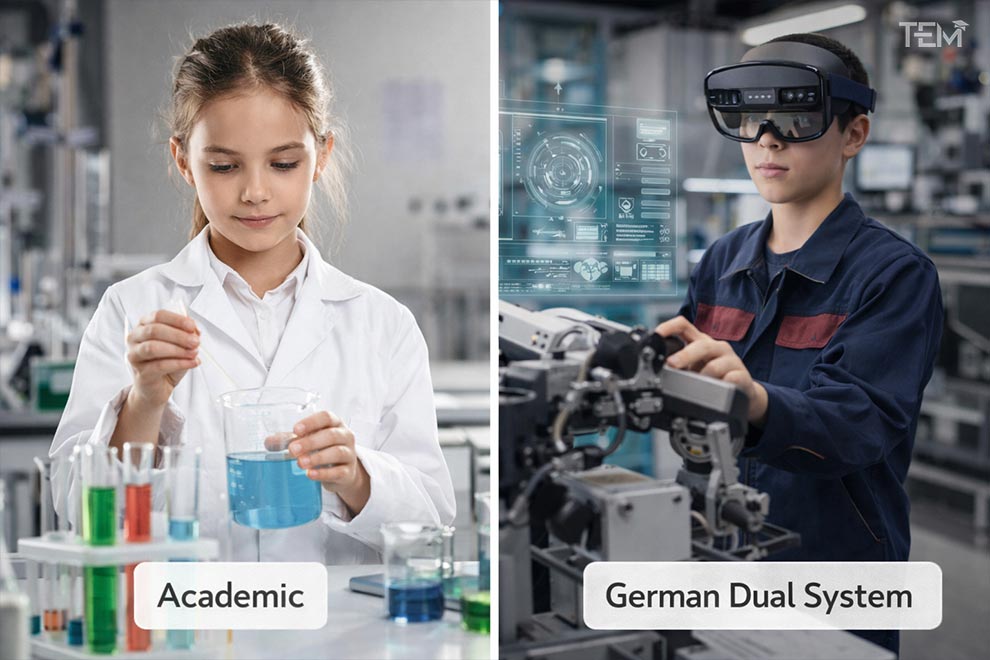
Germany offers one of the clearest examples through its dual education system. Students can enter structured vocational tracks that combine classroom instruction with paid apprenticeships in industry.
Approximately 40–45% of upper-secondary students in Germany pursue vocational pathways rather than academic tracks, according to data from the Federal Institute for Vocational Education and Training (BIBB). This contributes to comparatively low youth unemployment among OECD countries.
Unlike university-dominant systems, the German framework embeds employers directly into curriculum design and certification standards. This tight integration between education and labor markets reduces skills mismatch and supports smoother school-to-work transitions.
In contrast, the United States places a stronger cultural emphasis on university education, although technical colleges and skills-based programs are expanding.
The Rise of Stackable Micro-Credentials
In 2026, education is increasingly connected to the global skills economy. Traditional degrees are being complemented by stackable certifications and micro-credentials in education.
According to workforce-aligned education outlooks published by the World Bank and industry research, modular credentialing is growing across parts of Europe and South Asia, as governments respond to rapid technological shifts.
Students can now earn industry-recognized qualifications in areas such as digital literacy, sustainable energy, or artificial intelligence while completing secondary or tertiary education.
These evolving credentials represent one of the most important modern shifts in how schooling is structured globally, as countries compete to align schooling with economic demand.
4. AI Integration and Digital-First Education
Technology now shapes some of the most visible contrasts between school systems worldwide.
From Experimentation to Governed AI Deployment
Over the past few years, schools experimented with AI tools. In 2026, that experimentation has matured into a structured, policy-governed deployment.
Singapore leads with AI-supported platforms that assist with adaptive practice and personalized feedback, all within a centralized curriculum framework. The system emphasizes governance, teacher oversight, and data ethics, not just technology adoption.
Similarly, Estonia’s national digital infrastructure enables integrated e-learning environments across public schools. Its strong performance in international digital literacy comparisons has been closely observed in global benchmarking studies.
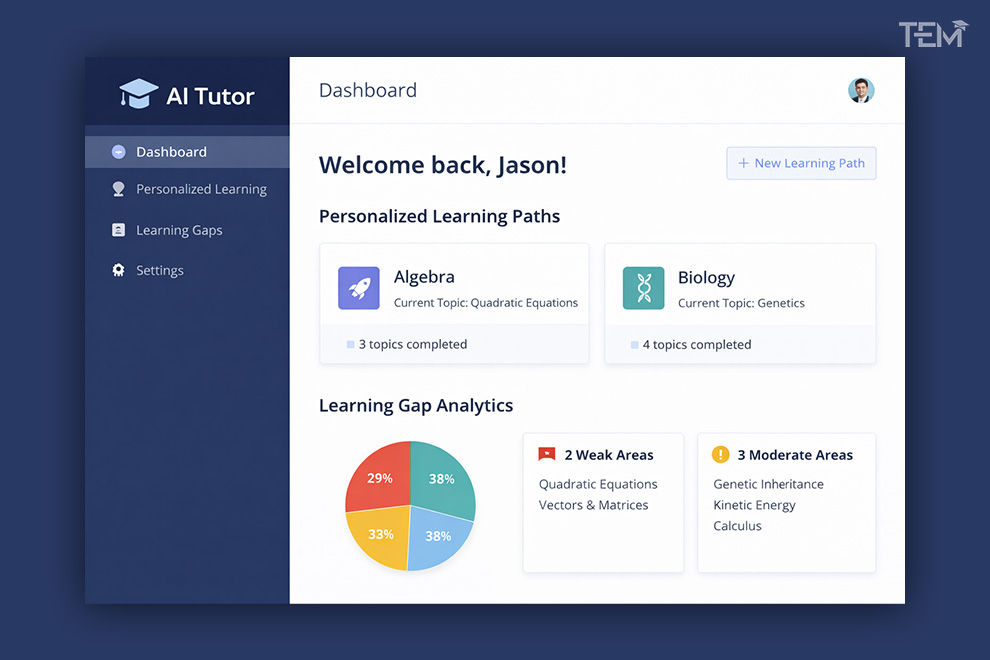
These systems use AI to identify learning gaps early, helping teachers intervene before students fall behind one of the most well-documented benefits of AI in education today.
The key difference lies in governance. High-performing digital systems combine innovation with strong ethical oversight, ensuring data privacy, transparency, and teacher control.
Digital Literacy as a Core Skill
Digital education is no longer optional.
Estonia is often referenced as a country where digital literacy is embedded across subjects rather than treated as a standalone technical module. Coding and computational thinking begin early, but equal emphasis is placed on responsible technology use.
Beyond technical skills, students learn how to evaluate online information, understand algorithmic bias, and use technology responsibly.
Some systems treat technology as a tool. Others treat it as infrastructure. That distinction is one of the clearest educational disparities we see when comparing nations today.
5. Student Well-Being as a National Indicator
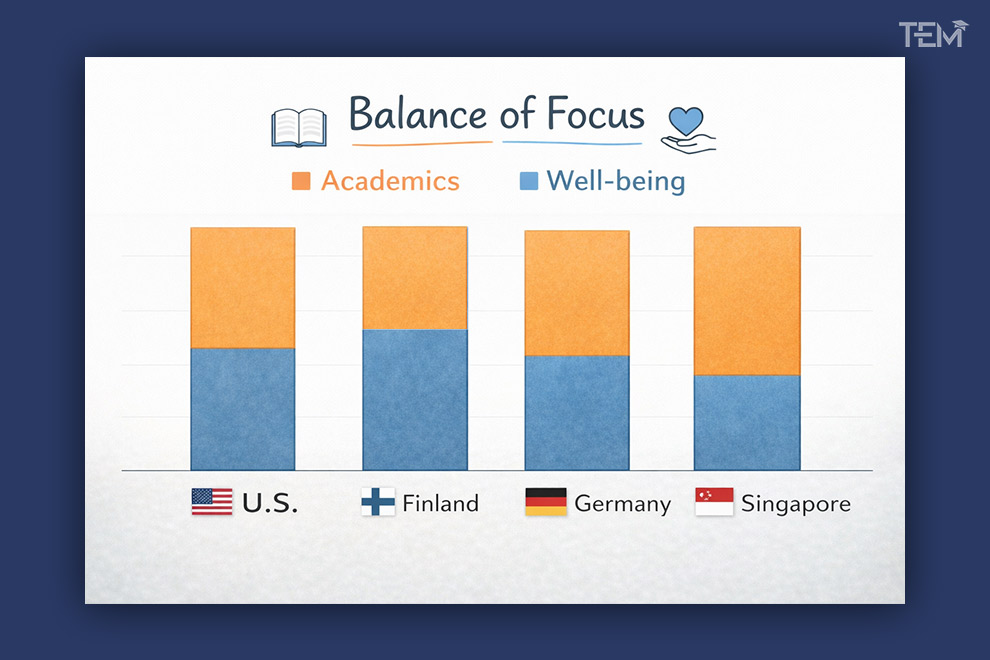
A growing shift in global policy shows that academic performance alone no longer defines success.
Balancing Rigor and Wellness
The UNESCO Global Education Monitoring Report 2025 emphasizes that leadership quality and inclusive governance directly influence both academic performance and student satisfaction.
Similarly, OECD well-being indicators increasingly accompany academic reporting in comparative education reviews.
The debate is not about eliminating rigor; it is about sustainability. Policymakers now recognize that attention management, emotional resilience, and social skills contribute directly to lifelong achievement.
Education Beyond Test Scores
Modern education frameworks consider broader indicators:
- Student belonging and safety
- Teacher satisfaction and retention
- Gender equity in leadership
- Access across socio-economic groups
International policy reviews from the OECD increasingly evaluate equity and inclusion metrics alongside academic achievement dimensions not always visible in rankings alone.
6. Global Benchmarks and International Comparisons
The most widely recognized benchmark is the PISA, coordinated by the OECD. Conducted every three years, it evaluates 15-year-olds in reading, mathematics, and science across dozens of countries.
The most recent completed cycle, PISA 2022 (results released in 2023), assessed more than 80 education systems. Results from the 2025 cycle, focused on science and digital learning, are expected later in 2026 and will provide the next major global snapshot.
Singapore ranked among the top performers in mathematics with an average score of 575 points, significantly above the OECD average of approximately 472. Estonia also performed well above the OECD mean in mathematics and science.
According to the OECD Report Education at a Glance 2025, sustained investment in teacher quality and curriculum coherence remains a common trait among consistently high-performing systems.
In our review of the data, PISA data reinforce a key point: these structural variations in schooling are deeply structural, not superficial. Performance correlates with teacher quality and training standards, equity in funding distribution, curriculum coherence, and socioeconomic support systems.
Comparing Education Systems: US vs Finland vs Germany vs Singapore
To better understand how education differs between countries, consider a simplified comparison of four influential models:
United States
Decentralized governance. Strong university ecosystem. Wide variation in standards across states. Standardized testing and GPA-based grading play a role, though implementation differs regionally.
Finland
High teacher autonomy. Minimal standardized testing in the early years. Strong emphasis on equity and student well-being. National curriculum with flexible execution.
Germany
Structured secondary tracking. Strong dual vocational system integrated with industry. Apprenticeship pathways embedded in economic planning.
Singapore
Centralized curriculum. Rigorous national benchmarks. Structured AI integration. Strong performance in international assessments.
Each reflects distinct national priorities. None operates by accident. These examples illustrate concrete differences in education systems shaped by culture, labor markets, and long-term strategy.
Which Country Has the Best Education System?
This question appears frequently in global searches. The answer depends on what metric you prioritize:
- Highest test scores?
- Strongest vocational alignment?
- Best student well-being outcomes?
- Most advanced digital integration?
PISA rankings highlight academic performance. UNESCO frameworks emphasize equity and inclusion. Economic institutions evaluate workforce alignment.
There is no single perfect model, only different strategic strengths.
Understanding these distinctions allows policymakers and families to compare education systems more intelligently.
7. A Snapshot of Differences in Education Systems
To simplify the global picture, here is a structured comparison highlighting how major systems differ in focus and design, now anchored with country-level examples:
| Region / Model Type | Testing Approach | Vocational Strength | AI Integration | Well-Being Focus | System Philosophy |
| Exam-Centric Systems (e.g., South Korea) | High-stakes national exams | Moderate | Growing | Moderate | Meritocracy & performance |
| Dual-System Models (e.g., Germany) | Balanced assessments | Strong apprenticeship pathways | Industry-aligned tech use | Moderate | Workforce alignment |
| Digital-First Systems (e.g., Estonia, Singapore) | Continuous & multi-modal | Emerging | Advanced infrastructure | Balanced | Innovation & agility |
| Well-Being-Oriented Systems (e.g., Finland) | Minimal standardized testing | Flexible pathways | Controlled integration | High priority | Equity & holistic growth |
8. What These Differences Mean for the Future
Education is no longer designed only to transfer knowledge. It is built to develop sustainable human capital.
According to global development analyses from the World Bank, countries that align education policy with economic transformation strategies experience stronger workforce participation and innovation outcomes.
In 2026, the most resilient systems share common traits: they align curriculum with economic reality, balance accountability with teacher autonomy, integrate AI responsibly, and measure well-being alongside academic results.
The global skills economy demands adaptability. As automation transforms industries, education systems must prepare learners not just for exams but for evolving careers.
The real differences in education systems today lie in how nations respond to uncertainty. Some protect tradition. Others redesign boldly. The systems that succeed combine structure with flexibility and innovation with human judgment, a shift already visible in how AI is reshaping higher education institutions worldwide.
The System Shapes the Future
Every country’s education model tells a story about its ambitions. Some prioritize discipline and standardized outcomes. Others invest in creativity, digital fluency, or social-emotional learning.
Understanding the differences in education systems helps us see how societies create opportunity, stability, and long-term growth.
Education is not simply a public service. It is a strategic national investment.
As global challenges evolve, education will remain the most powerful policy lever any nation holds.
If this guide gave you clarity, share it with educators, students, and decision-makers who care about building stronger systems for the next generation.
FAQs
- What are the main differences in education systems?
The main differences in education systems include curriculum governance, testing models, vocational pathways, AI integration, funding structures, teacher autonomy, and student well-being priorities.
- Which country has the best education system in 2026?
There is no universal “best” system. Countries such as Singapore and Estonia perform strongly in international benchmarks like PISA, while Finland is recognized for equity and well-being integration. Germany stands out for vocational alignment.
- Why do some countries rely heavily on exams?
Exam-focused systems emphasize standardized benchmarking and merit-based progression. Governments use national exams to maintain accountability and ensure comparability across schools.
- How is AI changing education systems globally?
AI supports adaptive learning, real-time diagnostics, and personalized feedback. The key difference lies in governance frameworks. Systems such as Singapore and Estonia integrate AI within national digital strategies rather than isolated experimentation.
- What is the dual education system?
It is a structured model, widely associated with Germany, that combines classroom instruction with paid apprenticeships in industry. Students gain practical work experience while completing formal education.