The Education Magazine
October 14, 2026
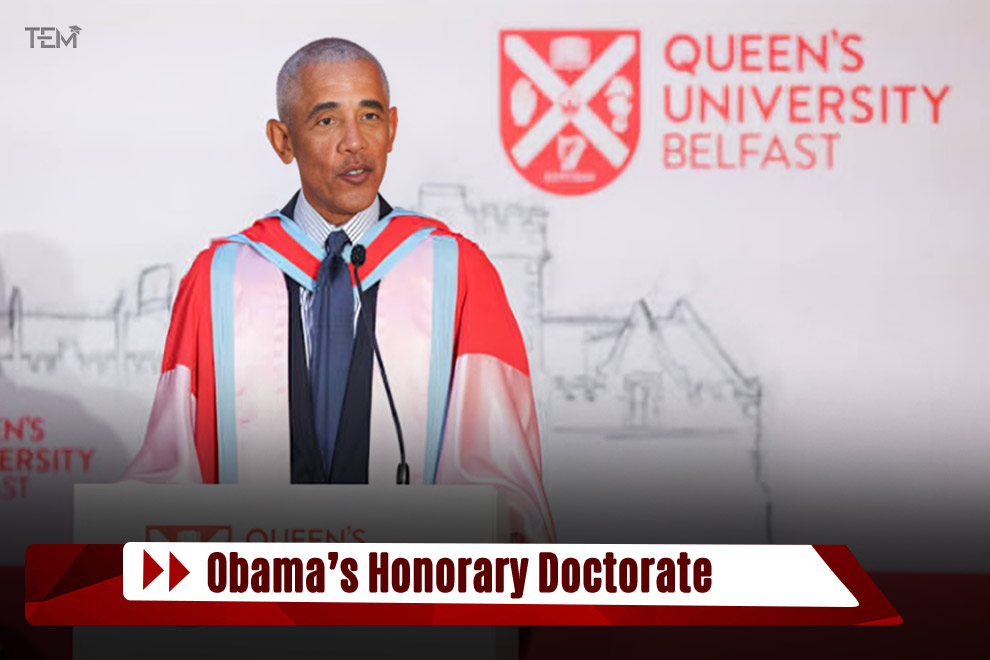
Former US President Barack Obama received an honorary doctorate from Queen’s University Belfast on October 13, 2026, praising Northern Ireland’s progress since the Good Friday Agreement and urging young people to help build a peaceful, inclusive future.
Obama’s honorary doctorate ceremony also highlighted how community-based education programmes can help students access university, with first-year student Emma McAllister presenting the citation for the award.
Why Did Queen’s University Belfast Award Barack Obama an Honorary Doctorate?
The honorary doctorate is the highest honour Queen’s University Belfast can bestow. During the ceremony, attended by students, staff and guests, Obama reflected on Northern Ireland’s peace process and the importance of ensuring that its benefits reach every community.
Queen’s President and Vice-Chancellor Professor Sir Ian Greer welcomed the former president, saying,
“We are privileged to welcome President Obama to Queen’s. His commitment to peace, dialogue and public service has left a lasting impact around the world, and particularly here in Northern Ireland.”
Obama’s honorary doctorate ceremony recognised his public service and highlighted his message on sustaining peace, strengthening democracy, and promoting inclusion in Northern Ireland.
What Did Obama Tell Students About Peace and Democracy in the Honorary Doctorate Ceremony?
In the Honorary Doctorate Ceremony, Obama said that Northern Ireland’s experience demonstrates what communities can achieve when they move beyond past divisions. However, he warned that peace and democratic values require continued commitment.
Obama said,
“The Good Friday Agreement is still a shining example of what can happen when people put aside old wounds and choose peace.”
Obama added,
“But as we have seen in many countries, including in my home country, the United States, peace and democracy are not inevitable. They have to be chosen, again and again.”
Obama’s remarks linked Northern Ireland’s experience of conflict and peacebuilding to the challenges democracies face in protecting peace and democratic values. He also stressed that the benefits of peace must be shared by everyone, including young people who continue to face social and educational barriers.
Obama urged Queen’s University Belfast students and staff to build a more inclusive future, reflecting on his previous visit to Belfast in June 2013.
How Does Queen’s University Belfast’s Widening Participation Programme Improve University Access?
Widening participation refers to efforts to help students from under-represented backgrounds enter and succeed in higher education. Outreach, mentoring, academic preparation and recognised qualifications can help young people understand their options and prepare for university.
Queen’s announced a further development in its R-CITY partnership on October 10, 2026. The new Queen’s University Belfast–R-CITY CoLab Academy is intended to create additional routes into university, including support through the university’s Pathway Opportunity Programme. The announcement followed the graduation of 54 young people with a Queen’s Level 4 Certificate in Youth Leadership and Community Action.
The partnership between Queen’s University Belfast and the R-CITY programme provides a practical example of how universities can work with community organisations to help more young people access higher education.
Obama’s honorary doctorate brought renewed attention to the role of community programmes in helping young people access higher education.
What Does Obama’s honorary doctorate ceremony Mean for Higher Education?
Obama’s honorary doctorate ceremony at Queen’s University Belfast highlights how higher education can promote peace, inclusion, and community engagement beyond the classroom. His recognition also draws attention to the role universities can play in supporting young people, strengthening cross-community relationships, and expanding access to educational opportunities. Emma McAllister’s journey from the R-CITY youth programme to Queen’s offers a practical example of how community partnerships can help students pursue higher education.